
· JS · English · 4 min read
First Successful Drone Test Flights for EL & PL Inspection
From backyard tests to PV power plants: Solarzentrum Stuttgart has successfully completed the first drone test flights for electroluminescence (EL) and photoluminescence (PL) inspection under daylight conditions – including meaningful PL results during cloudy winter weather.

First test flights under real-world conditions
At Solarzentrum Stuttgart, we have successfully completed the first test flights for our drone-based electroluminescence (EL) and photoluminescence (PL) inspection under daylight conditions.
The goal of this test campaign was to validate the technology step by step under realistic operating conditions – ranging from simple, controlled environments to complex real-world scenarios.
The data collected during these flights forms a key foundation for the further development of our daylight luminescence solution.
Controlled entry: drone flights in a backyard environment
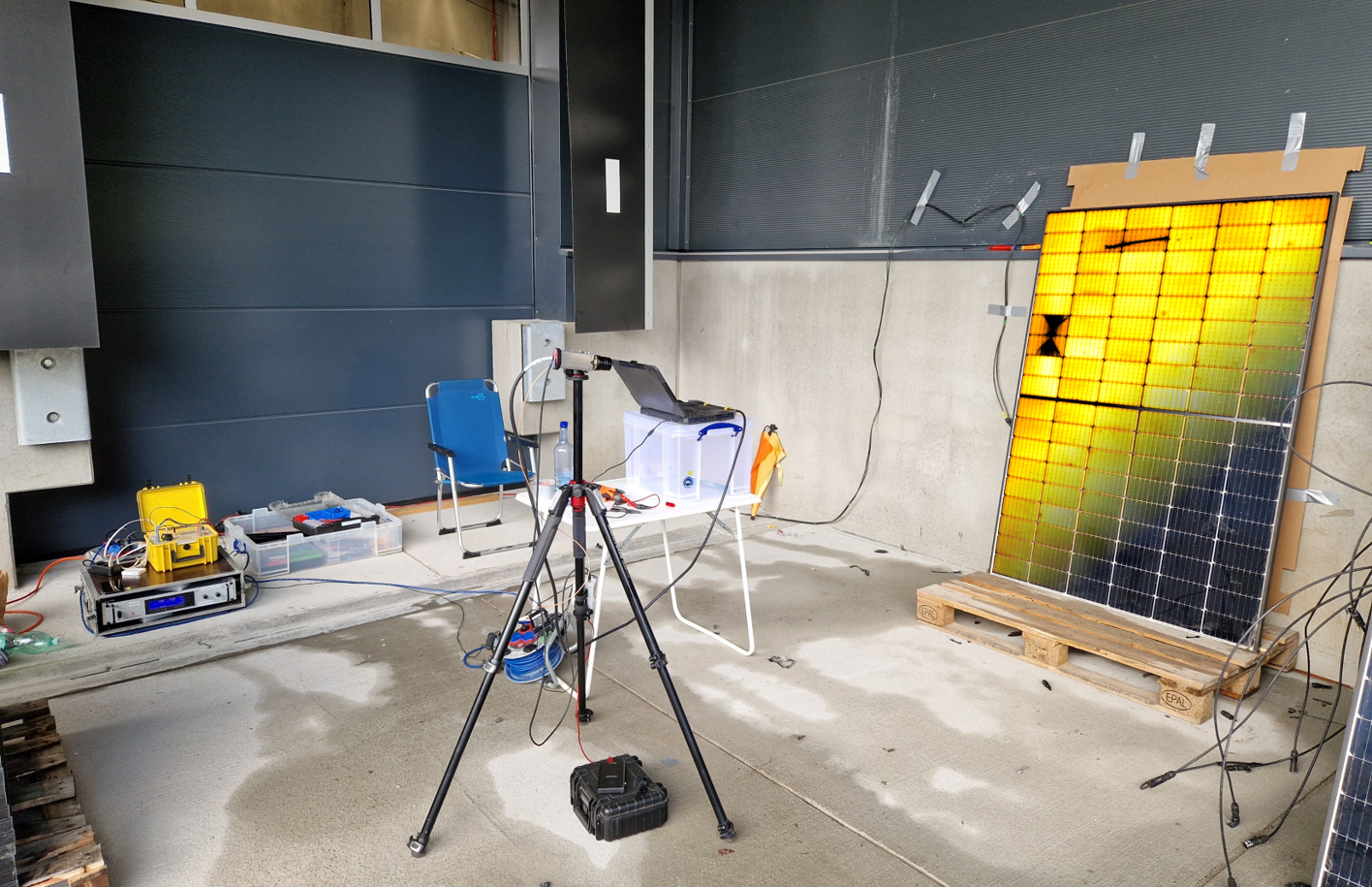
The initial tests were conducted in a backyard environment. The main objective of this phase was to generate PL and EL images directly from the drone for the first time and to verify fundamental system parameters.
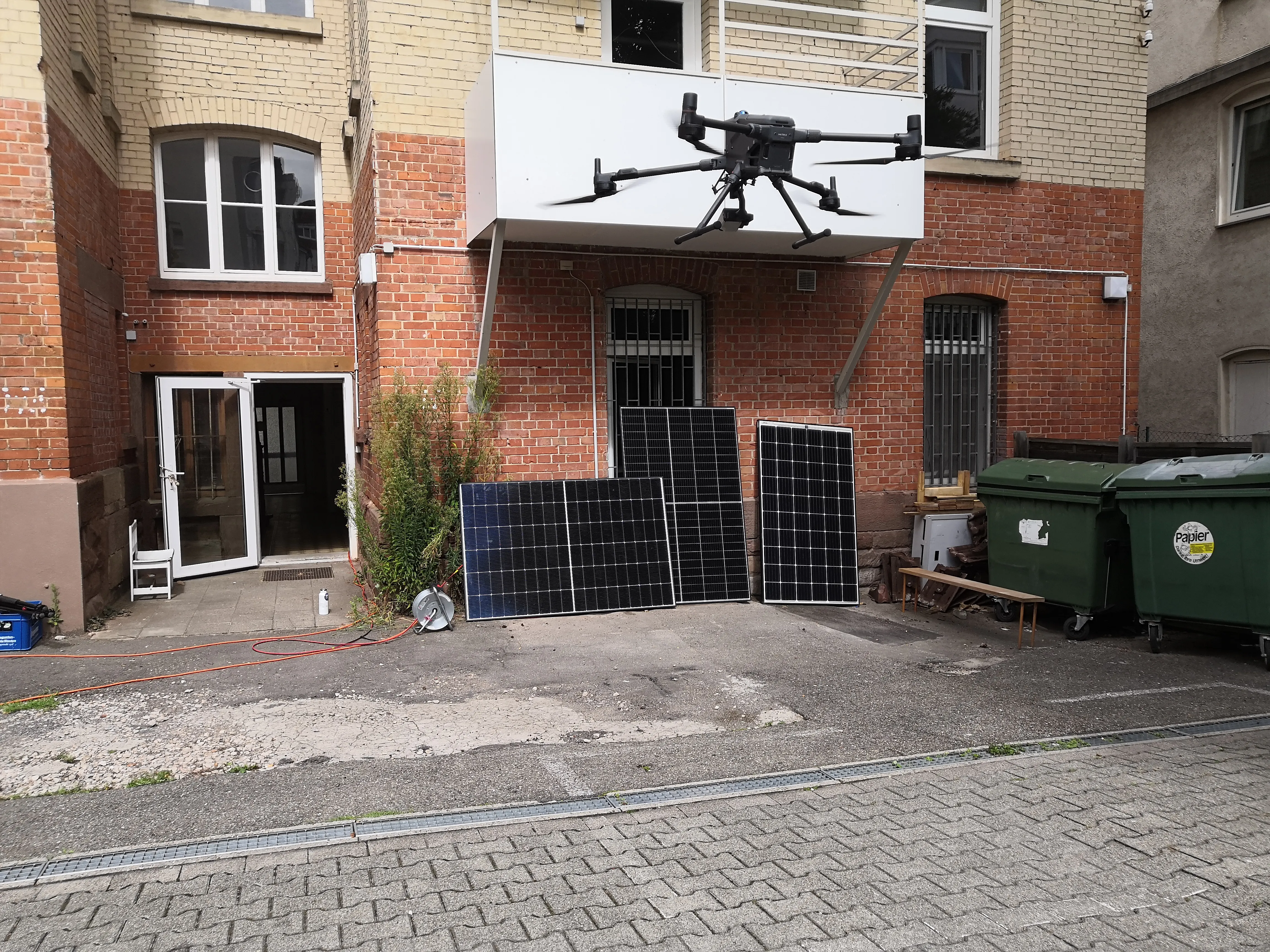
The focus was on:
- basic image formation from an airborne platform,
- image stability,
- and the application of initial image processing algorithms.
These flights provided the technical basis for all subsequent development stages.
Uninterrupted testing: flights in an open field
The next step involved flights in an open field. This environment enabled uninterrupted flights without visual or structural disturbances and was ideal for systematically testing different flight paths.
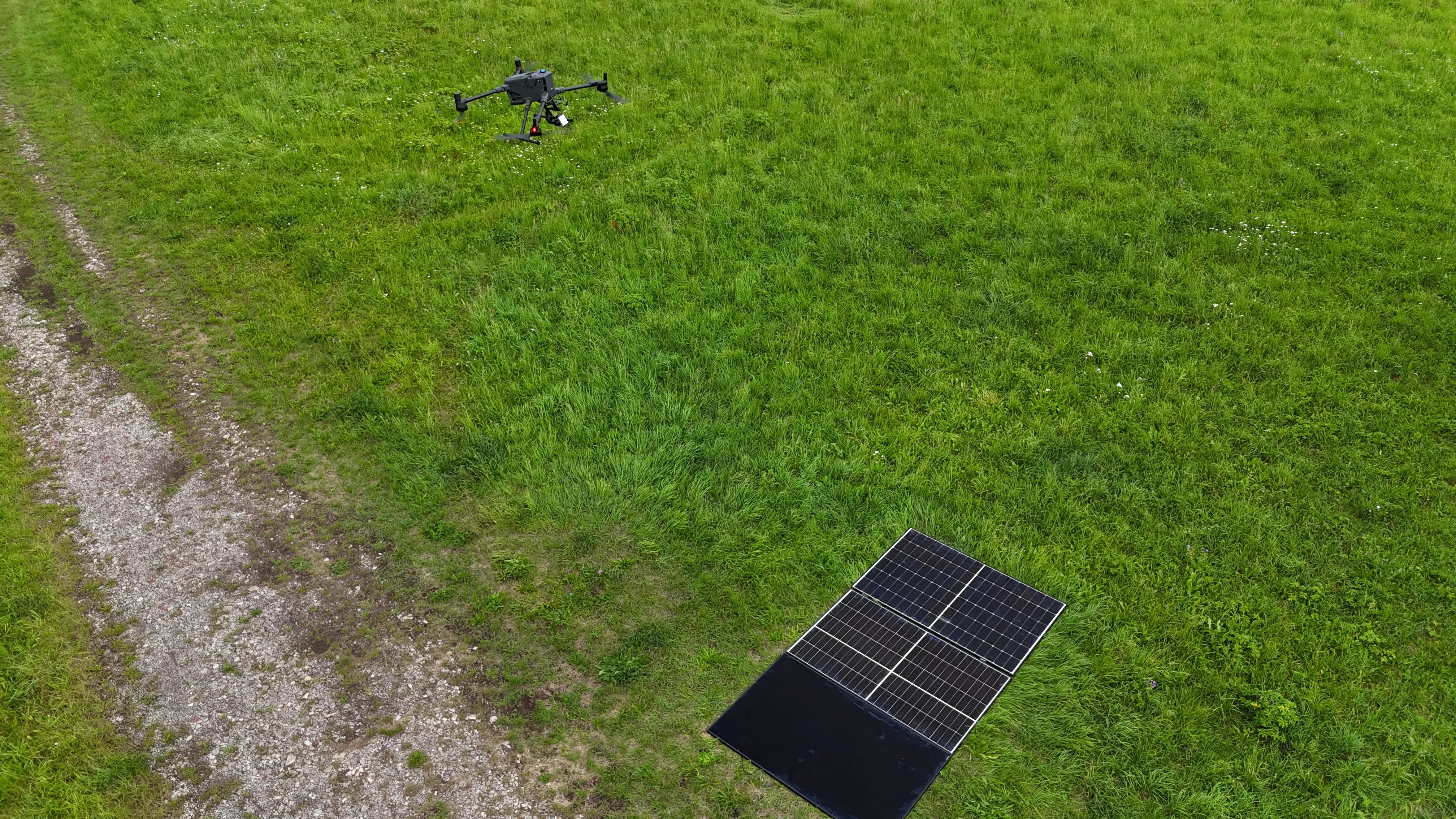
Key aspects included:
- executing different flight routes,
- and becoming familiar with the drone platform in measurement operation.
This phase primarily served operational safety and the development of routine handling of the drone system.
Practice-oriented development: flights in a PV power plant
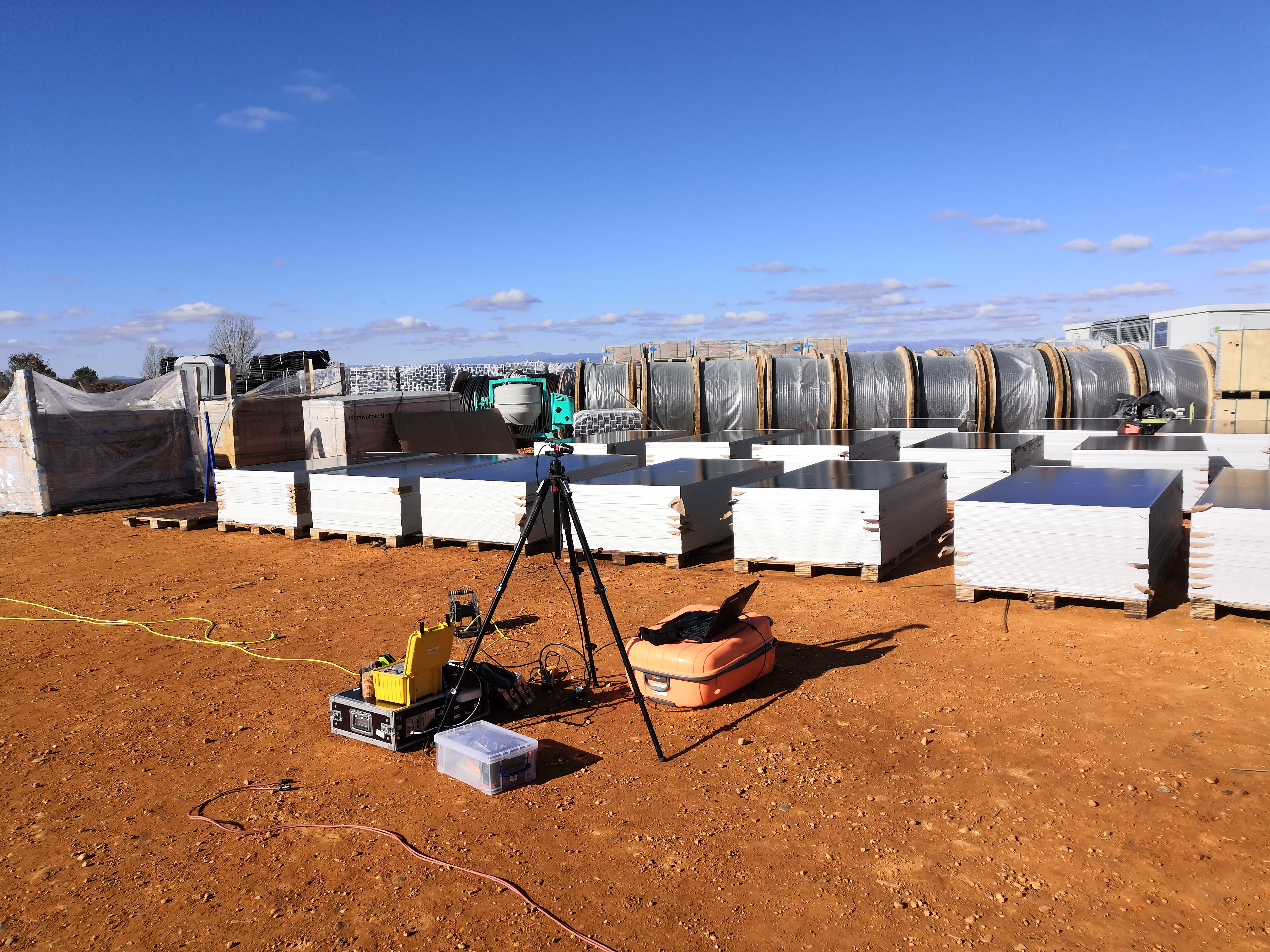
A major milestone was reached with the test flights in a PV power plant. Here, PL and EL were applied under real-world operating conditions on large photovoltaic module areas for the first time.
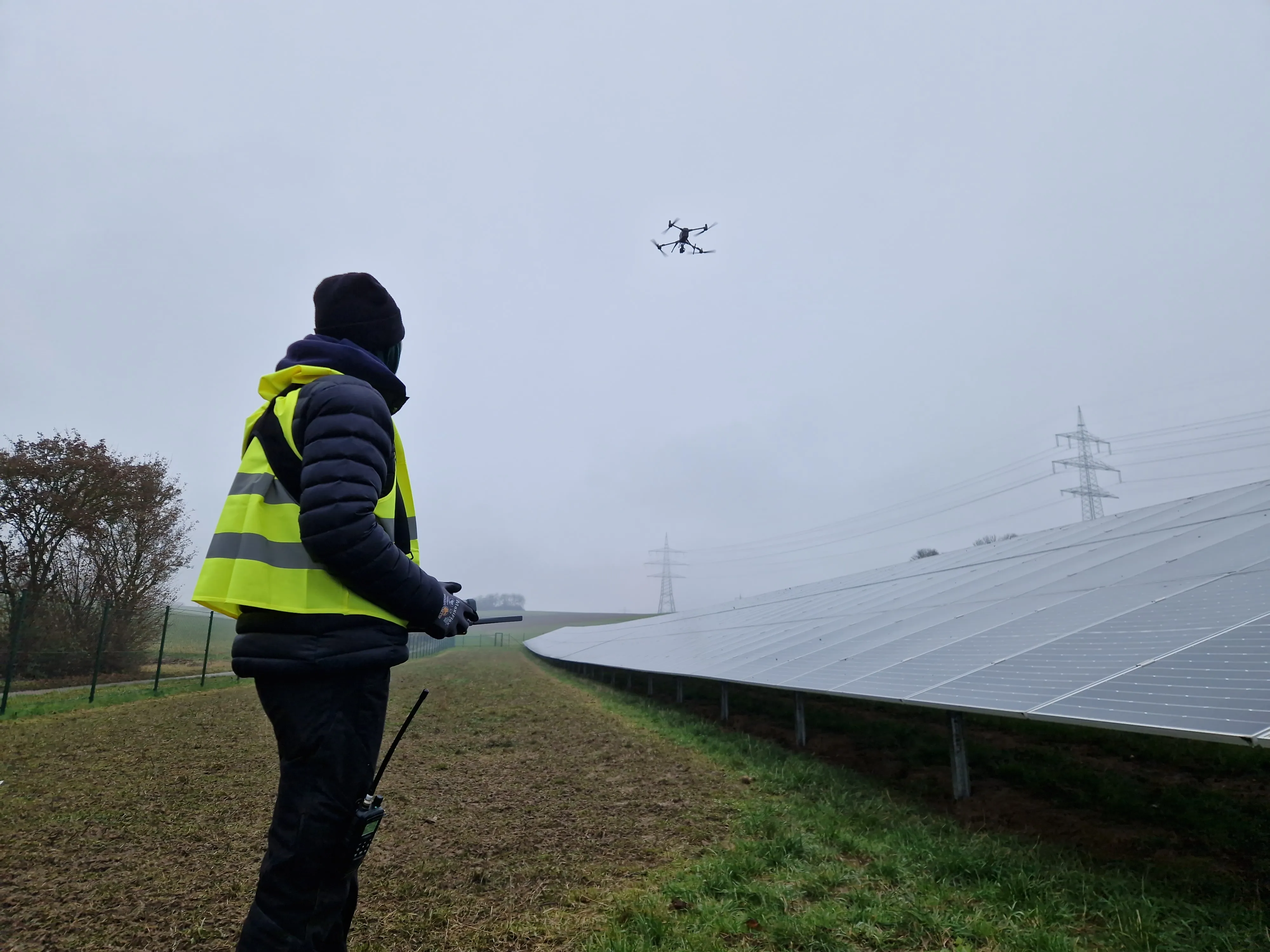
The main focus areas were:
- initial automation approaches in the flight workflow,
- multiple test series on flight speed and exposure time,
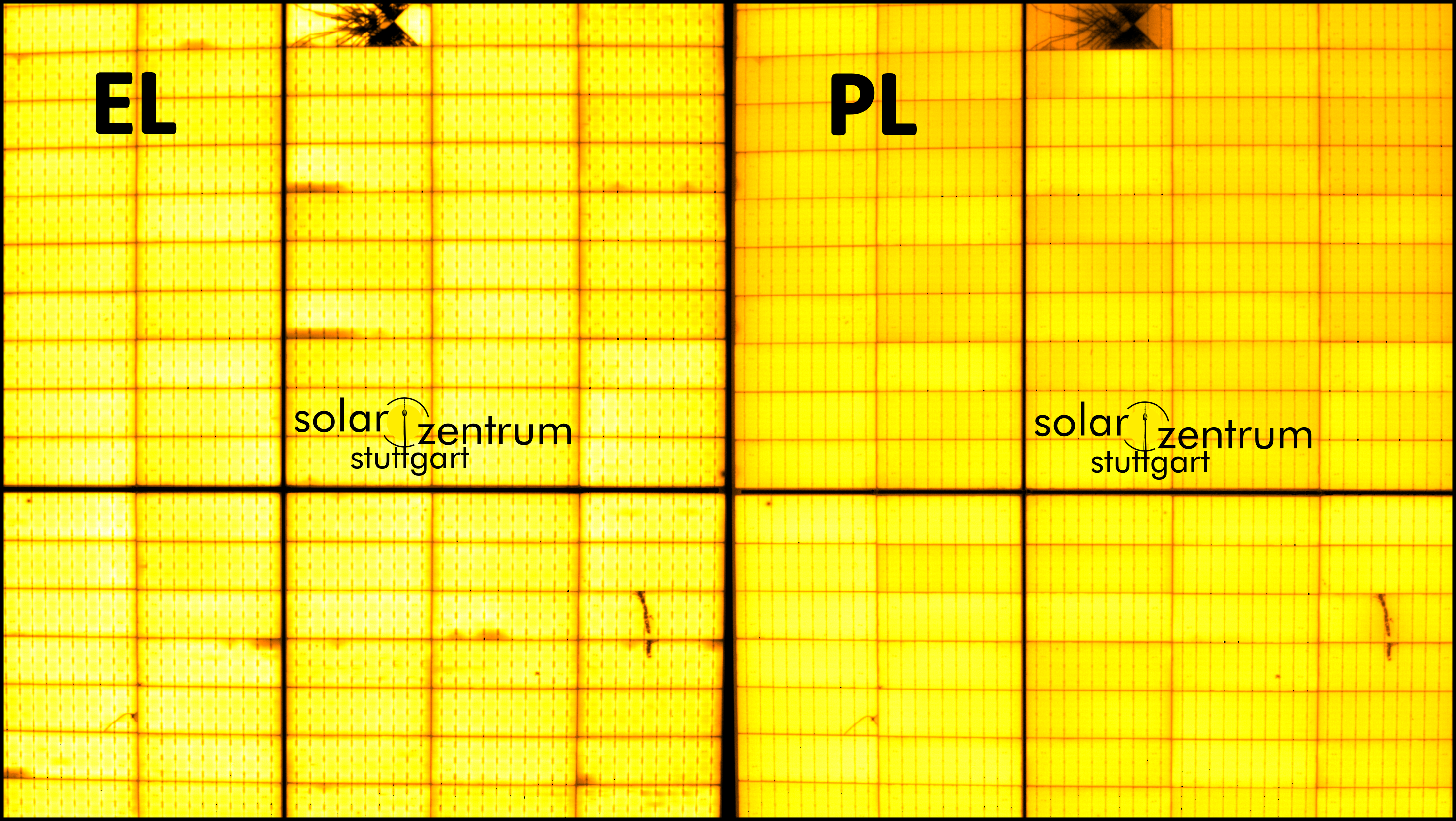
- systematic comparisons between PL and EL results,
- and gaining a deeper understanding of the boundary conditions required for high-quality image formation in the field.
The results of this phase are essential for future scalability and process stability.
Urban environment: flights above residential rooftops
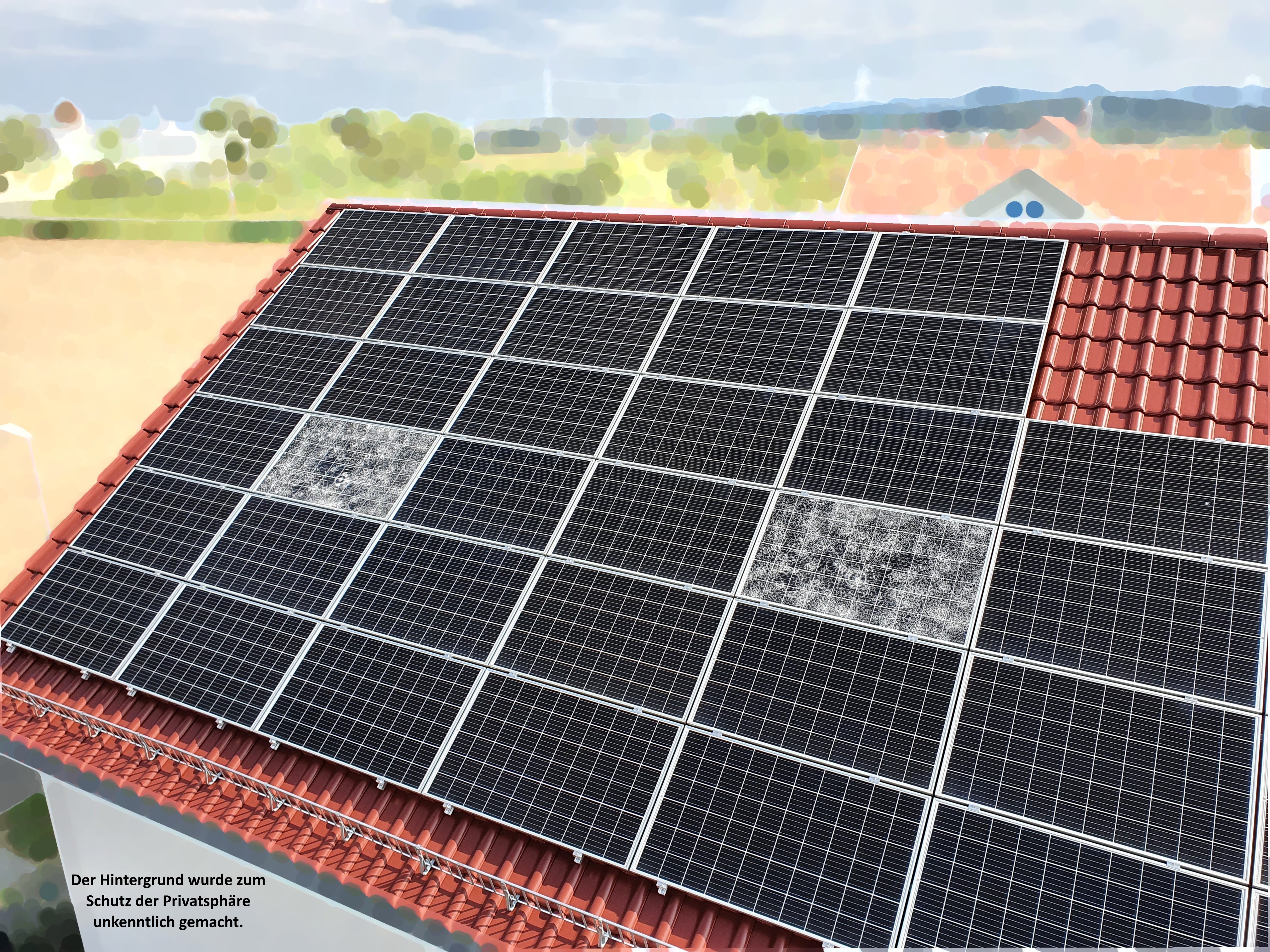
Finally, we conducted test flights above residential rooftops in an urban environment. These scenarios place significantly higher demands on planning and execution.
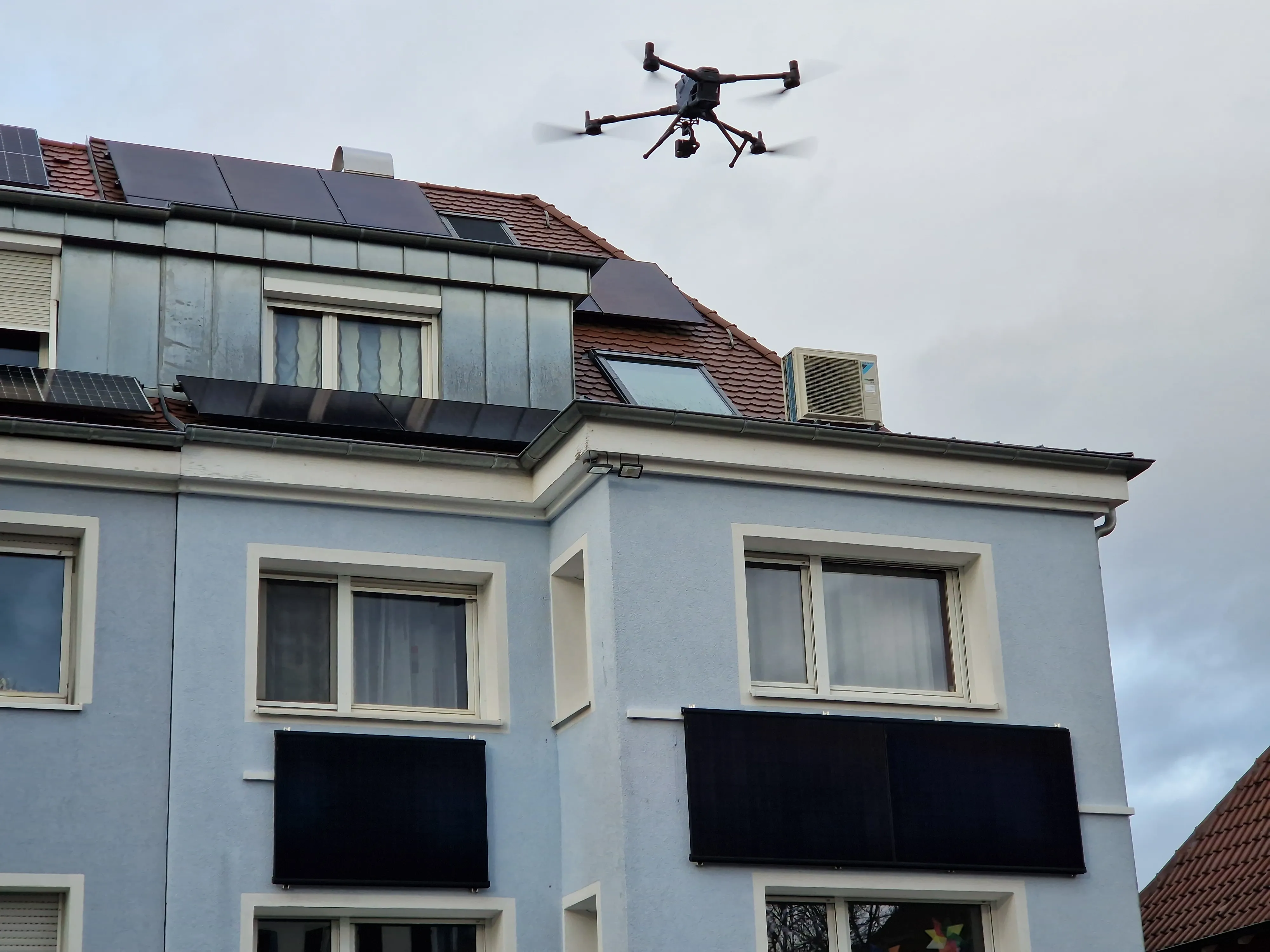
The focus here was on:
- the practical feasibility of the technology under complex conditions,
- collecting hands-on experience in existing buildings,
- operating under specific flight permissions,
- and realistically comparing laboratory, test, and real deployment conditions.
This phase is particularly relevant for future inspections of residential and commercial rooftops in urban areas.
Highlight: meaningful PL images despite winter and cloudy conditions
One particularly important result of our test campaign:
Even under cloudy winter conditions, we were able to acquire meaningful photoluminescence (PL) images directly from the drone.
This is crucial for practical applications in Central Europe, where suitable weather and irradiance windows are limited during winter. The results demonstrate that PL inspections can provide reliable information even under suboptimal conditions.
Overall conclusion: a key milestone for daylight luminescence
Overall, the test campaign was highly successful:
- numerous test flights were conducted,
- large volumes of measurement and image data were collected,
- EL and PL results were systematically compared,
- and valuable insights were gained for further development.
These test flights represent another important milestone in the development of daylight luminescence and confirm the strong potential of drone-based EL and PL inspection under real-world operating conditions.
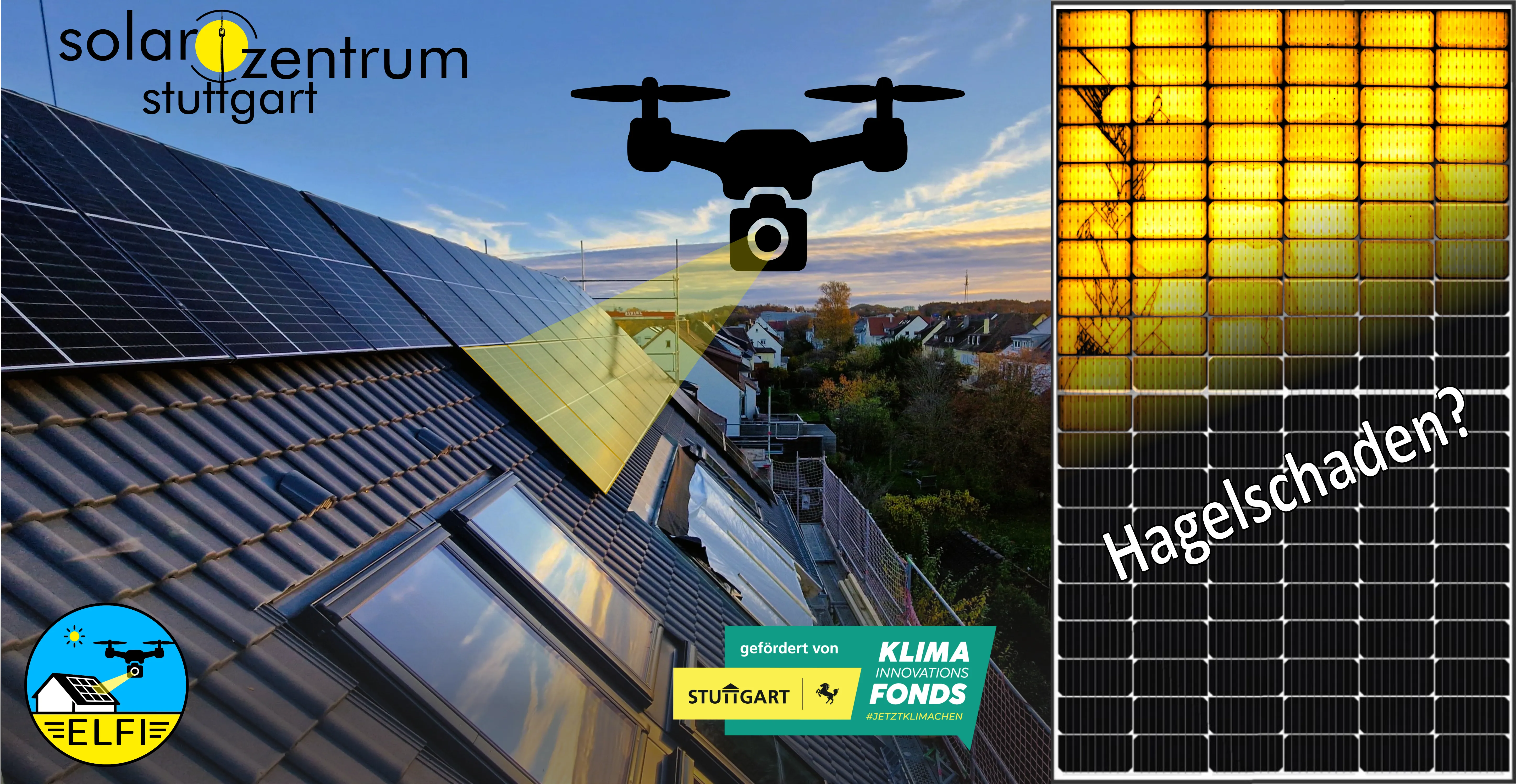
This development step is supported by the City of Stuttgart as part of the ELFI project, funded through the
Climate Innovation Fund of the City of Stuttgart.
Outlook
Based on the collected data, we are now focusing on further optimizing flight workflows, automation, and data evaluation – with the clear objective of bringing the technology into reliable, scalable, and practical field deployment.
If you have a rooftop or PV site that could serve as a test location, we would be happy to hear from you.