
· JS · English · 7 min read
KUR-500 V2 Drone for Daylight EL/PL Rooftop Inspection
With UP Caeli, Solarzentrum Stuttgart tested drone-based daylight EL/PL inspection for rooftop PV systems using the C2-certified KUR-500 V2.
From development concept to rooftop flight test
As part of the next phase of ELFI, supported through the Climate Innovation Fund of the City of Stuttgart, we visited UP Caeli to continue the development of drone-based daylight EL and PL inspection for rooftop photovoltaic systems. This work builds on our previous field tests and on the technical distinction between electroluminescence and photoluminescence in PV module inspection.
The visit was not only a demonstration flight. It was a working development session with a clear technical objective: bring measurement hardware, drone platform, flight workflow, and PV inspection requirements closer together under realistic field conditions.
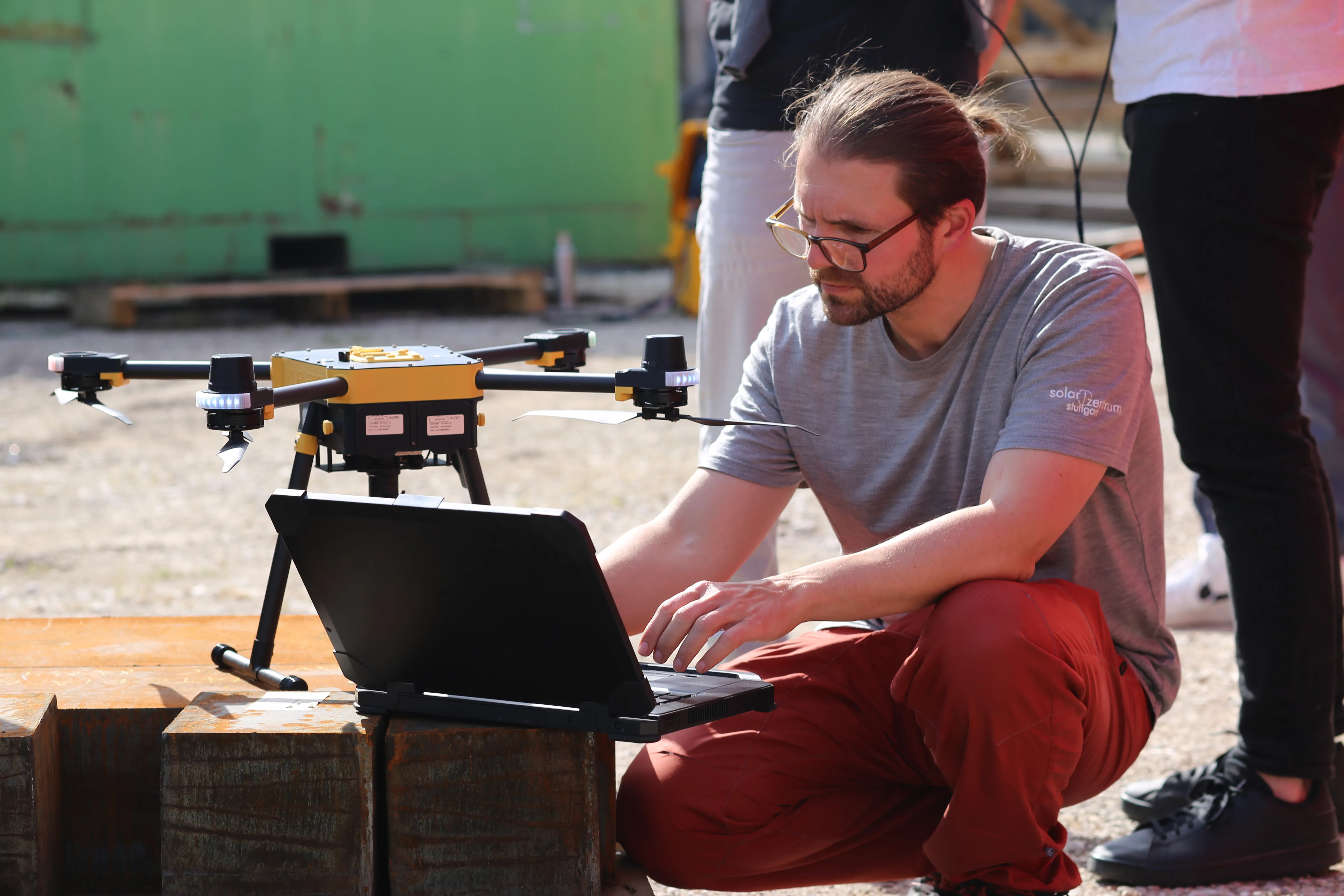
During the visit, the teams focused on:
- cooperation between measurement technology, drone operation, and PV inspection expertise,
- mechanical and operational integration of the measurement setup,
- engineering checks before flight,
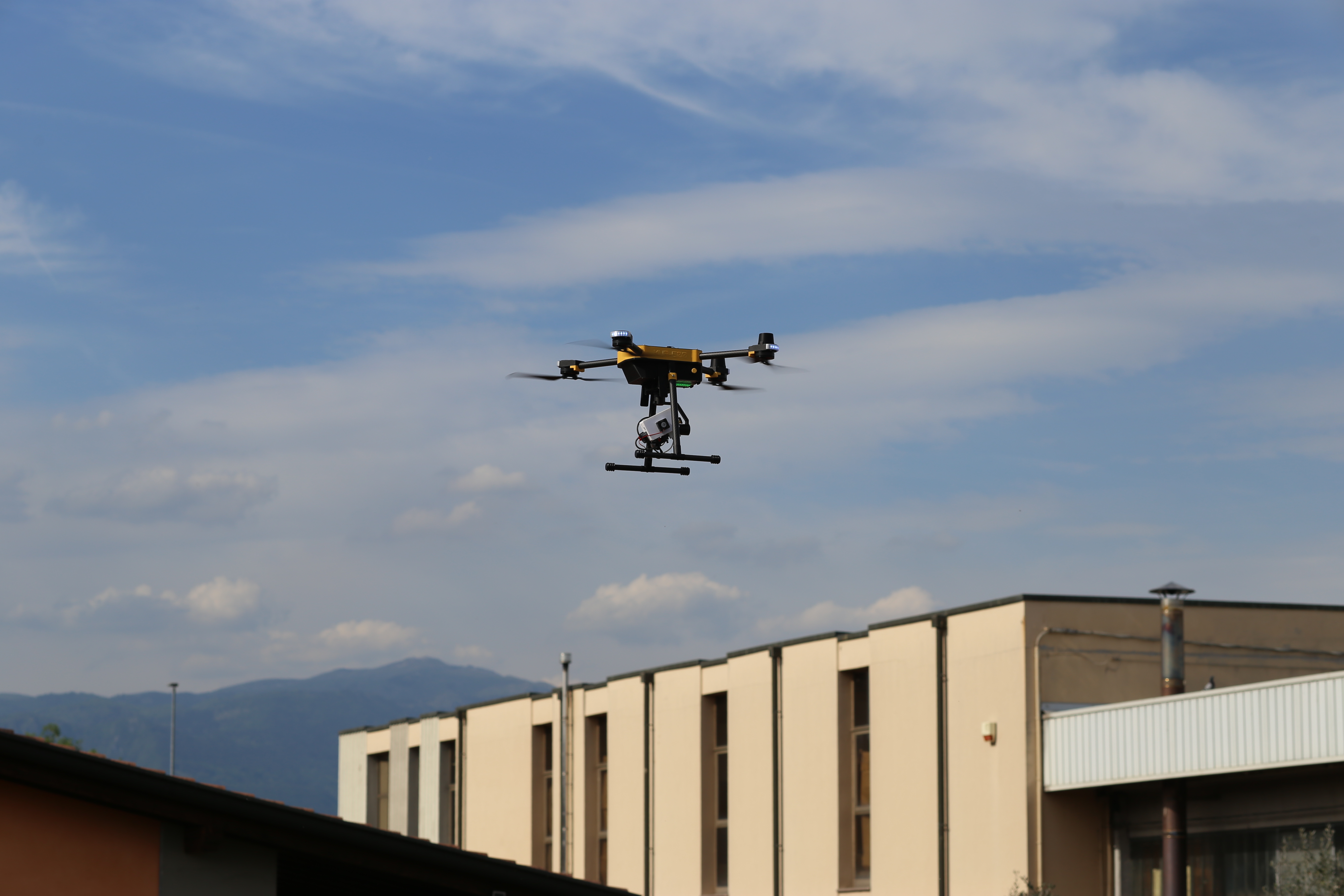
- test flights with the C2-certified KUR-500 V2 drone,
- and inspection of a rooftop PV system under daylight conditions.
This is the type of development work that matters for field deployment. Drone-based EL and PL inspection must work not only as an imaging principle, but also as a repeatable, safe, and practical inspection process.
Why the partnership with UP Caeli matters
For Solarzentrum Stuttgart, the cooperation with UP Caeli is an important step toward practical rooftop inspection workflows.
Our contribution is the daylight luminescence measurement chain: DaySy EL, daylight PL workflows, image acquisition, signal processing, and PV defect interpretation. UP Caeli contributes drone platform expertise, flight operation experience, and a professional inspection platform with the KUR-500 V2.
This combination is essential. A drone for PV luminescence inspection is not only a flying camera. It becomes part of the measurement system. Flight stability, payload integration, camera geometry, safety planning, and module-level image quality all influence whether the resulting data can support technical decisions.
We value the partnership because it connects two domains that must work together closely:
- PV module diagnostics,
- and professional drone-based inspection in complex environments.
KUR-500 V2: C2-certified drone capability for rooftop PV inspection
A key element of this development step is the use of the KUR-500 V2, a European C2-certified drone platform from UP Caeli.
For rooftop PV systems, especially in cities, this is highly relevant. Urban inspections take place close to buildings, streets, people, and other infrastructure. Safe and compliant operation depends on mission planning, qualified personnel, local boundary conditions, and the capabilities of the drone platform. For the regulatory context, the EASA open-category overview explains how C-class drones relate to Open A1/A2/A3 operations.
For our use case, the KUR-500 V2 supports several practical requirements:
- stable and controlled flight above roof surfaces,
- repeatable positioning over module areas,
- integration of inspection payloads,
- controlled imaging geometry for module-level data,
- daylight operation without waiting for darkness,
- and workflows that can be transferred from test sites toward real rooftop applications.
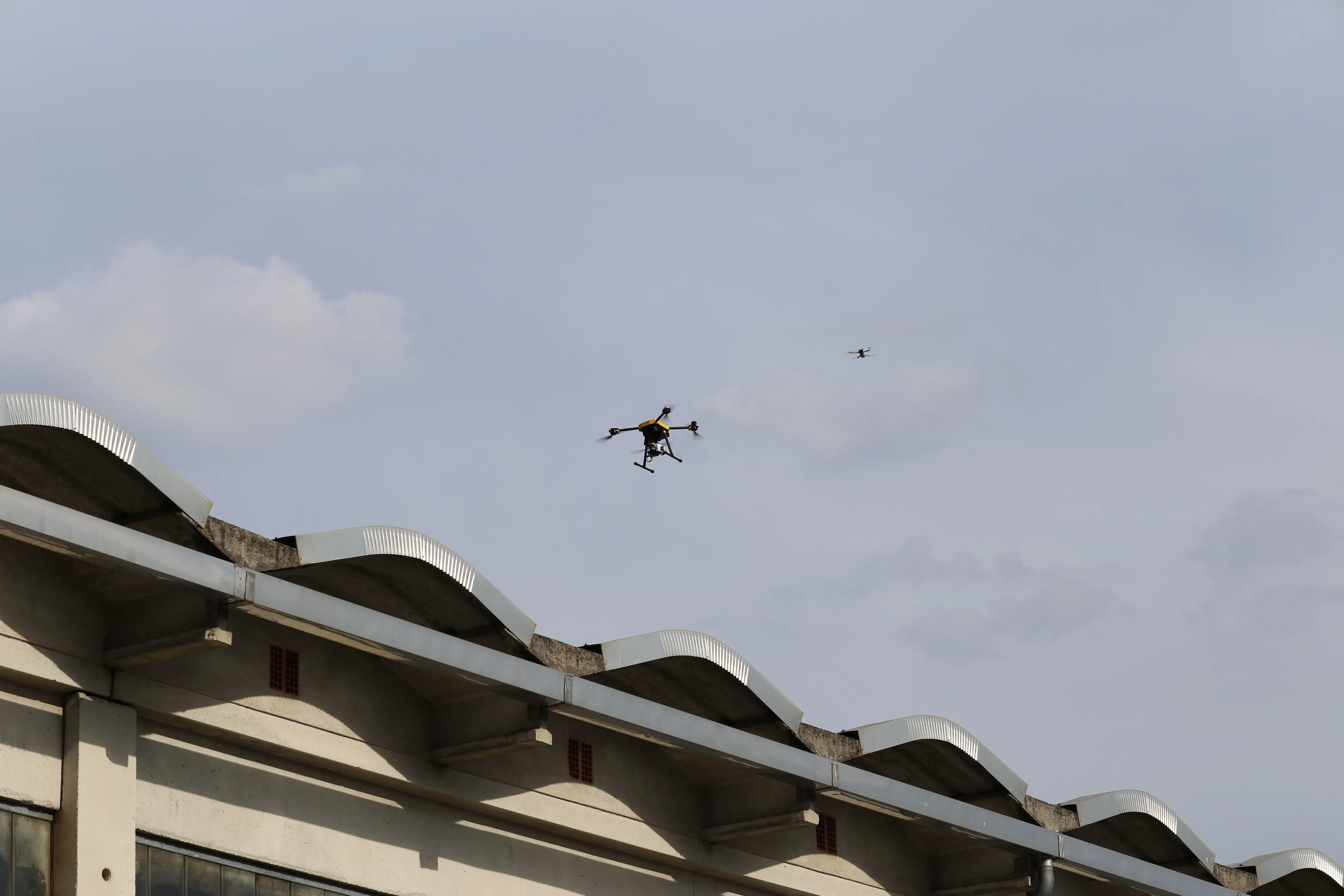
The goal is not to replace technical inspection expertise with automation. The goal is to make high-quality luminescence data easier to acquire on rooftops where access, working height, and inspection time are limiting factors.
Why daylight inspection is important in cities
Many rooftop PV systems in urban areas are difficult to inspect thoroughly. Visual inspection from the ground only shows surface-level information. Thermography can reveal thermal anomalies, but it does not provide the same electrical cell-level information as EL/PL inspection.
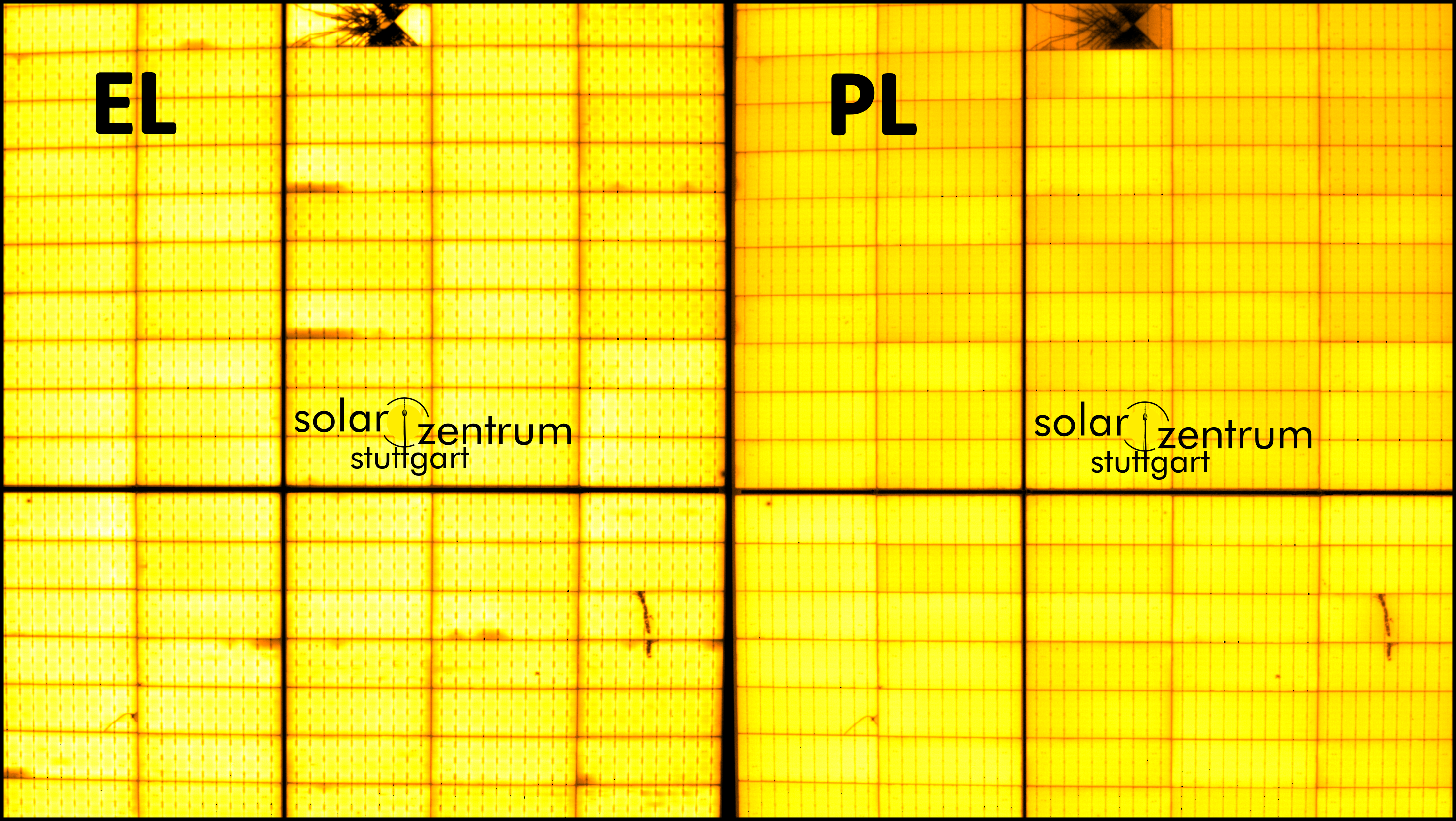
With daylight electroluminescence (EL) and photoluminescence (PL), hidden module defects can become visible during daytime field inspections:
- microcracks,
- electrically inactive or partially disconnected cell areas,
- contact and current-path irregularities,
- shunt-related behavior,
- and module-level inhomogeneities.
For city rooftops, the practical value is clear:
- less need for physical roof access,
- less dependence on night-time measurement windows,
- faster screening of difficult-to-access systems,
- and better technical evidence for owners, operators, installers, and warranty discussions.
This makes drone-based daylight luminescence especially interesting for residential buildings, commercial rooftops, public buildings, and industrial sites where scaffolding, lifting platforms, or night work would increase cost and complexity.
EL results: defect reference module and rooftop system
During the flight tests, we acquired two different types of module-level luminescence data. The first result came from a defect module that we placed on the ground against a green container in order to test recognizability under a less favorable but controlled geometry. The second result came directly from the rooftop PV system.
Defect module in front of the green container
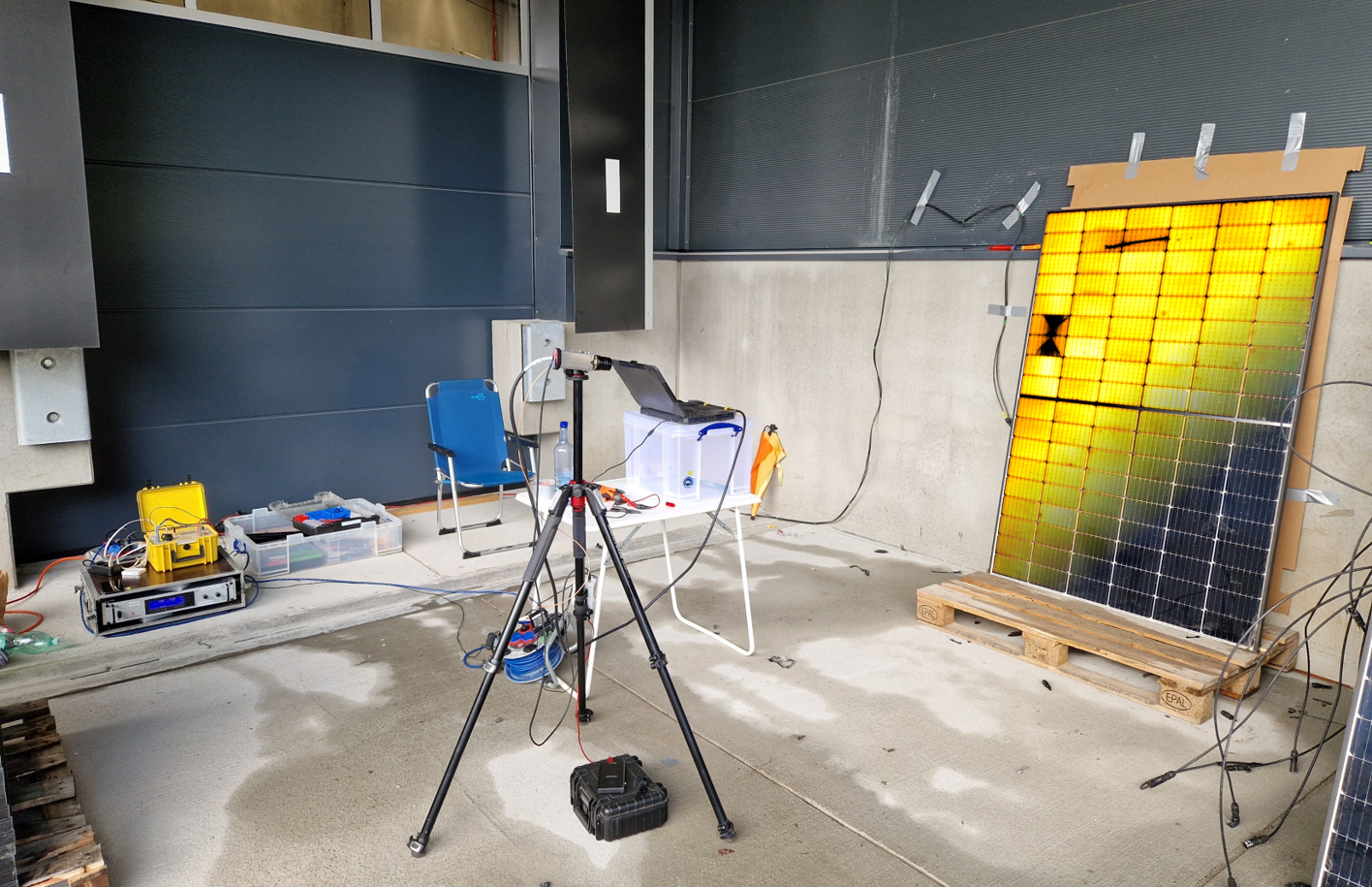
For the first result, we used a module with known defects and positioned it on the ground against the green container. The module did not show visible defects to the human eye, which made it a useful reference target for testing whether drone-based EL can reveal hidden mechanical damage under field conditions.
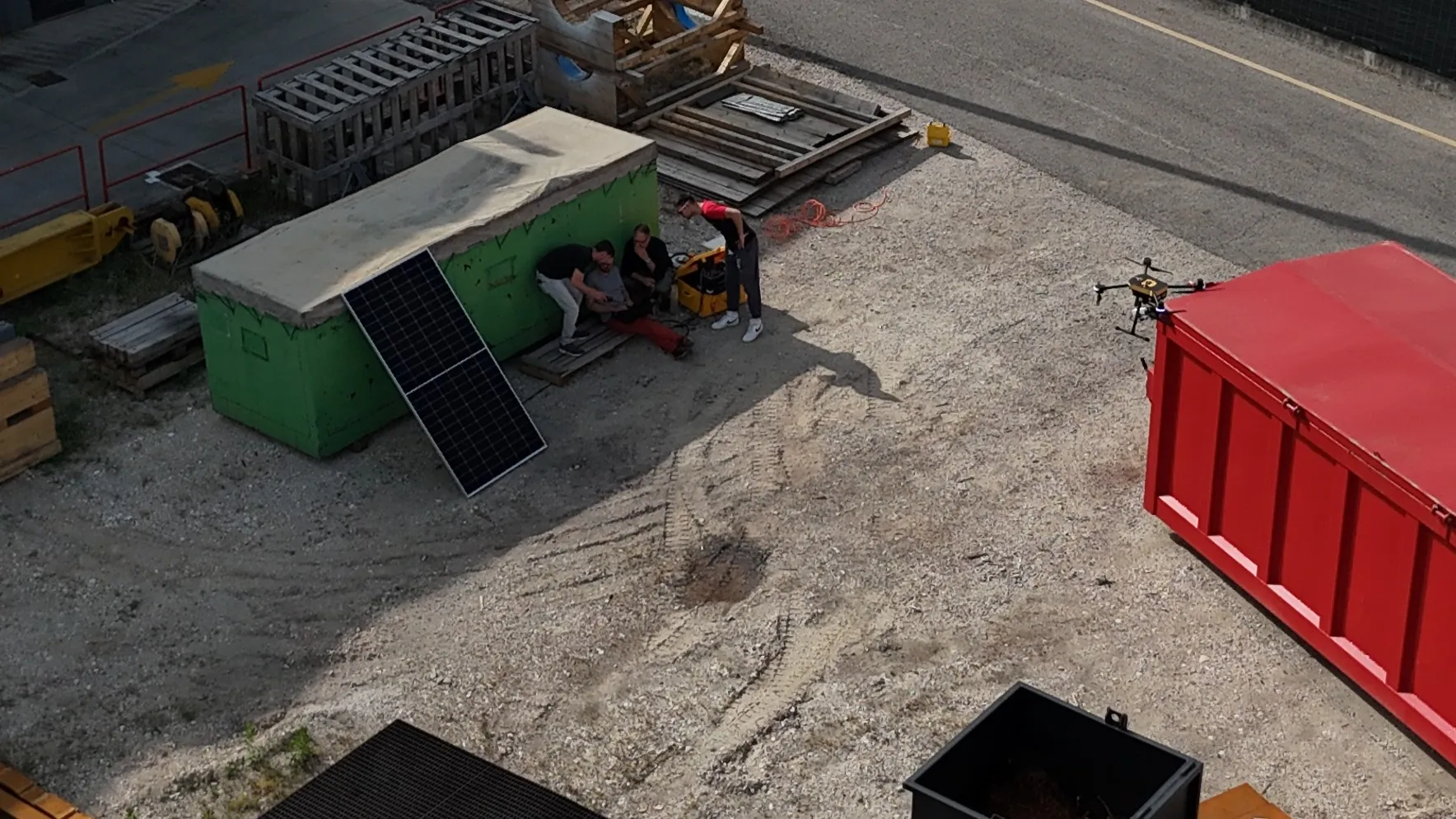
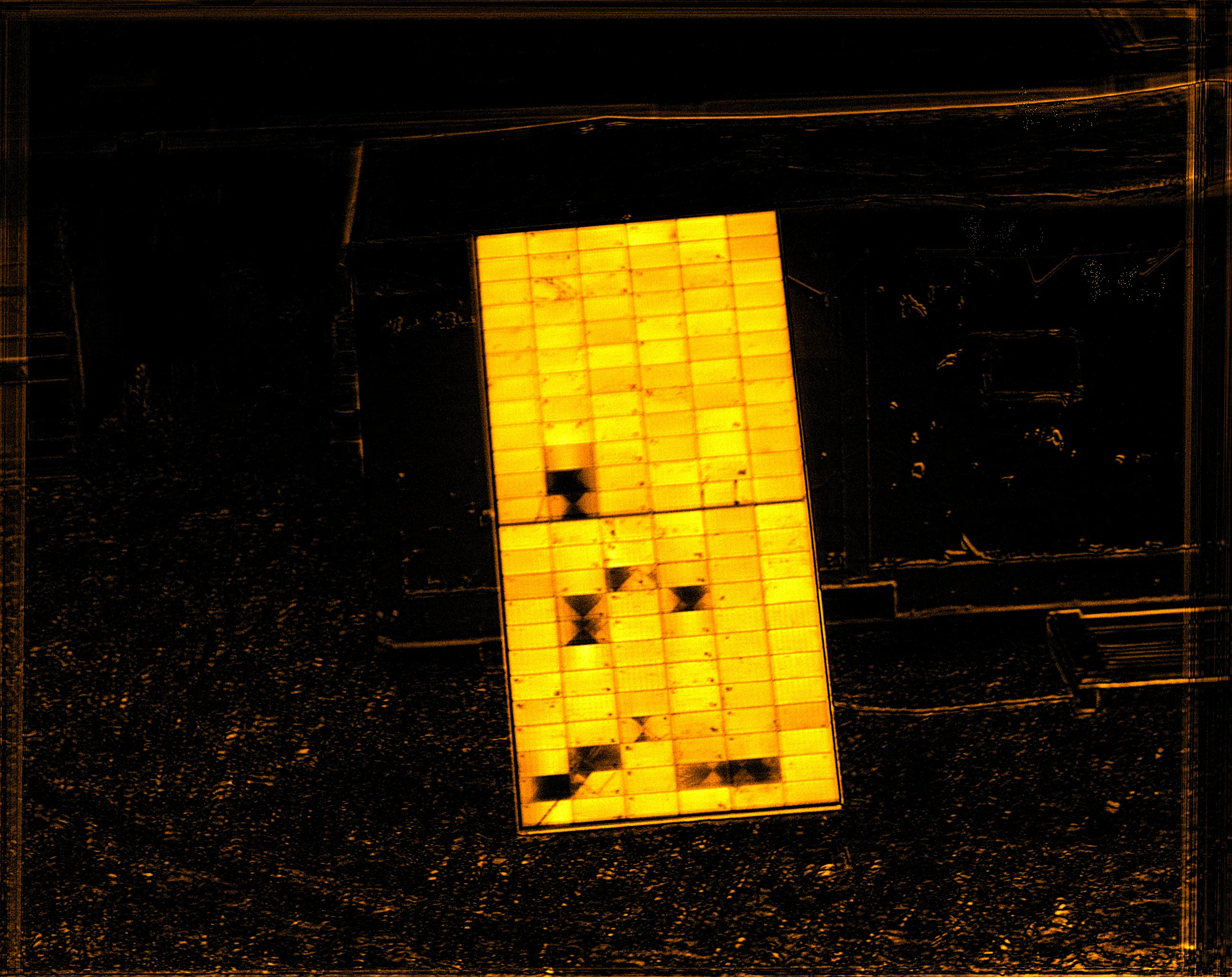
Figure 1: Setup and EL result of the defect reference module in front of the green container.
Although the distance to the module was comparatively high and the focus was not set perfectly, the EL image still shows clear defect signatures. Branching cracks and simple cracks caused by mechanical stress can be recognized clearly. This is relevant for development because it shows that even under non-ideal imaging conditions, the defect contrast remains strong enough to support technical interpretation.
Stabilized EL image from the rooftop PV system
The stabilized EL image from the rooftop PV system shows that meaningful module information can be extracted from the airborne measurement data. In this result, cell-level inhomogeneities are visible across the module. In addition, one single crack can be recognized, together with local dirt-related signatures on the module surface.
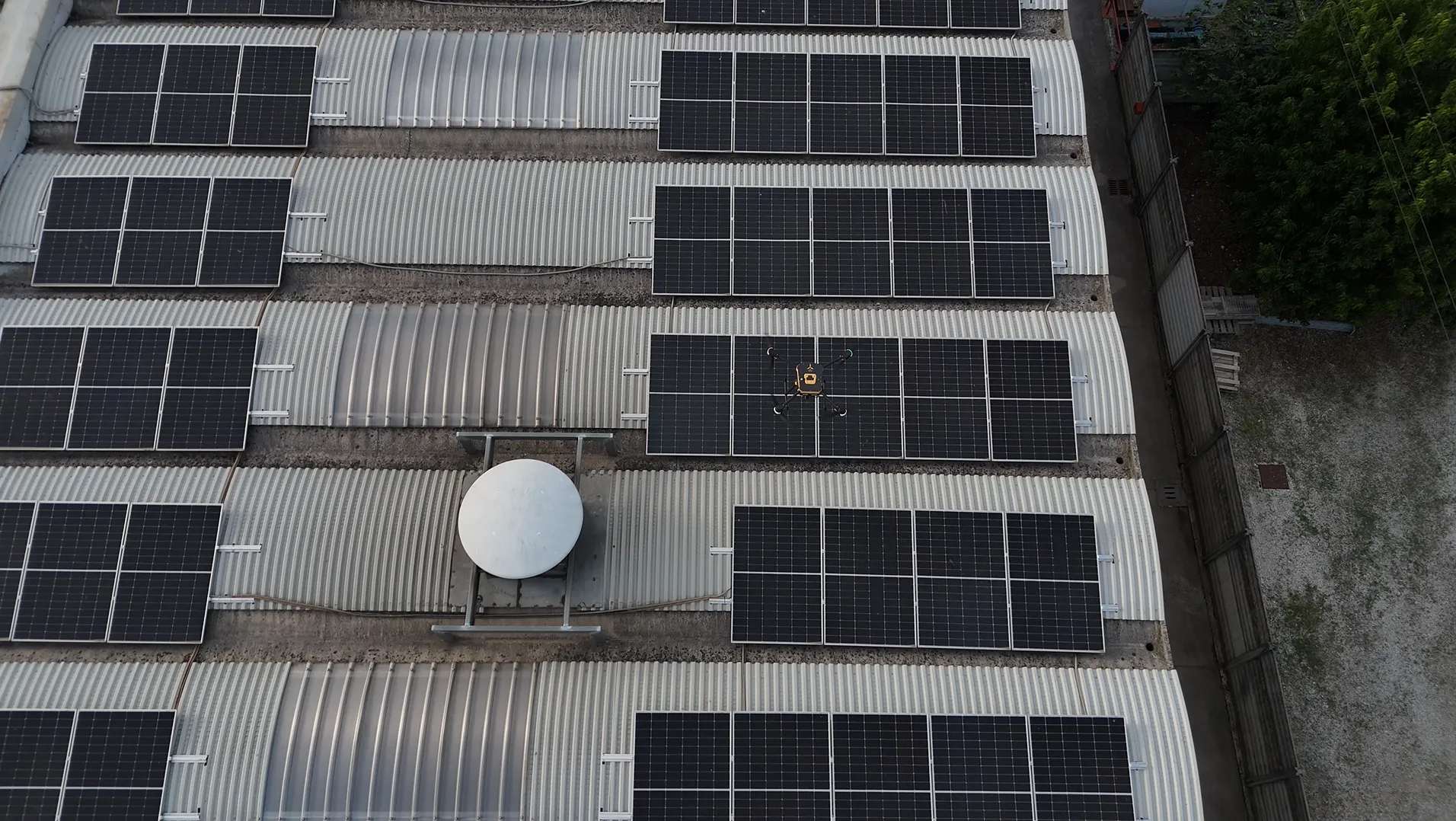
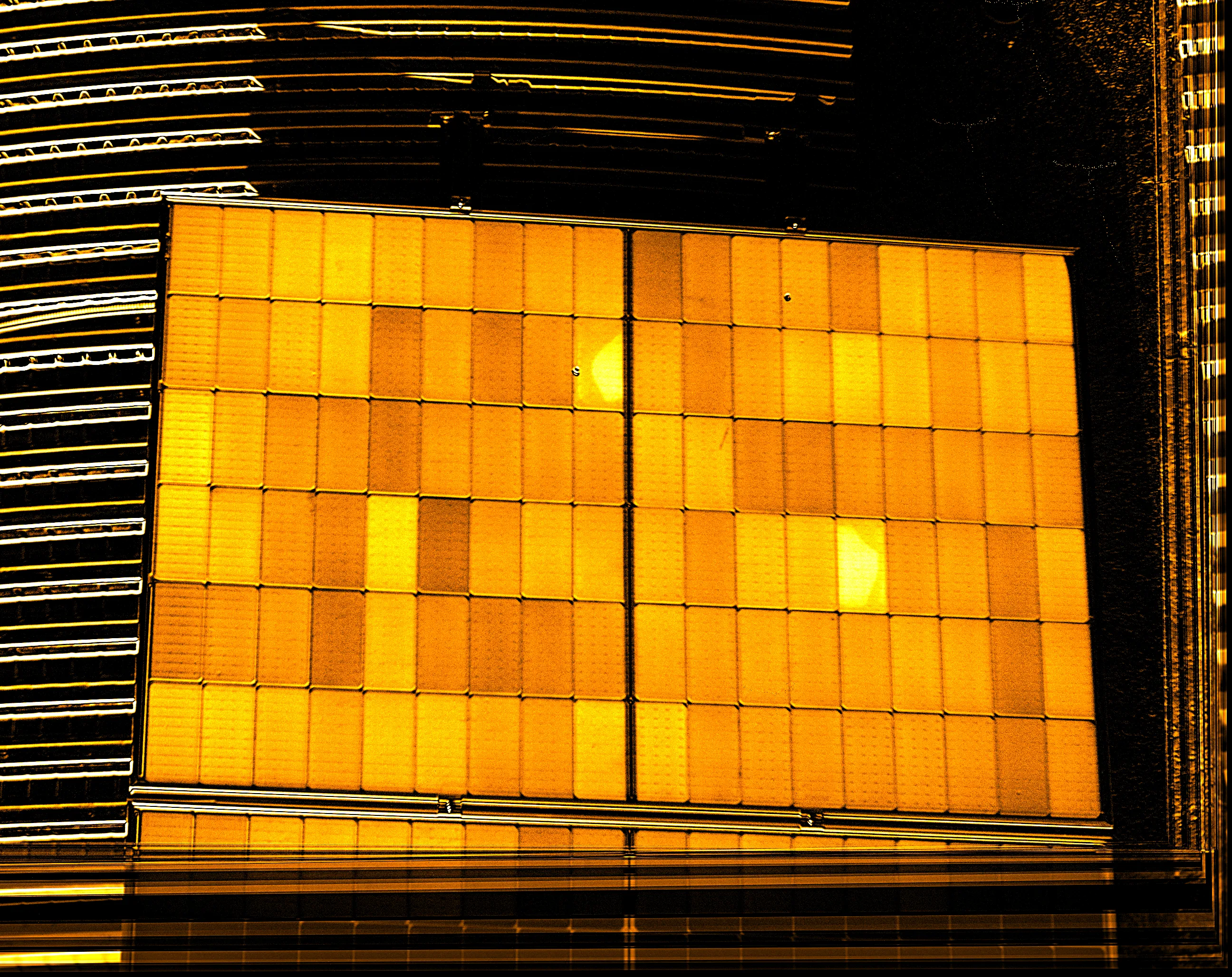
Figure 2: Setup and the resulting stabilized daylight EL image from the rooftop PV system. Visible are cell inhomogeneities, one single crack, and local dirt-related signatures.
This result is important because it represents the actual rooftop use case. The module remains installed, the drone provides the imaging perspective, and the resulting EL data still contains diagnostic information that would not be visible in a standard daylight photograph.
The important point is that these findings are not only visual artifacts. EL imaging shows the electrical behavior of the module under excitation. This makes it possible to identify defects that may not be visible in a standard photo and may not yet be obvious in plant monitoring data.
What this means for PV owners
For PV owners, rooftop EL and PL inspection from a drone can close an important information gap.
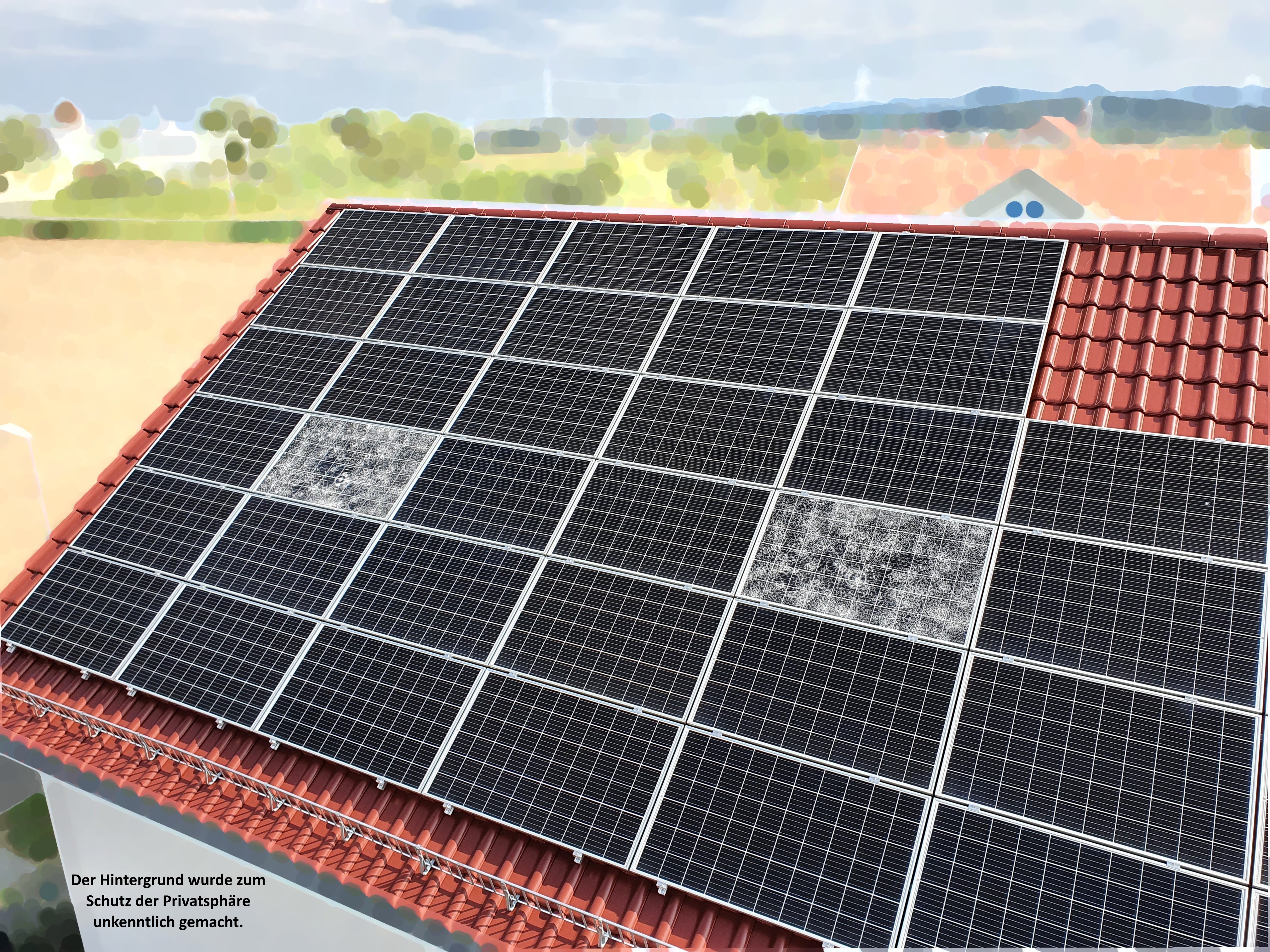
A PV system can look normal from the outside while still containing hidden module defects. These defects may originate from transport, installation, mechanical loads, hail, thermal stress, manufacturing issues, or early degradation. If they remain undetected, they can contribute to underperformance, warranty uncertainty, and avoidable maintenance effort.
Drone-based daylight luminescence inspection can support PV owners by providing:
- module-level evidence of hidden defects,
- faster screening of rooftop systems,
- prioritization of suspicious modules,
- documentation for warranty or insurance discussions,
- and a technical basis for deciding whether further testing is necessary.
This is especially relevant for owners who suspect underperformance, have experienced hail or storm events, are approaching warranty deadlines, or want an independent quality check after installation.
Outlook
The visit at UP Caeli marks another practical development step for ELFI. After the first drone-based EL and PL tests, the next focus is professionalizing the workflow: platform integration, repeatable flight operation, robust imaging, and scalable data evaluation.
Together with UP Caeli, we are moving drone-based daylight luminescence closer to practical rooftop PV applications.
If you own or operate a PV system and want to understand whether hidden module defects may be affecting performance, we are open to suitable rooftop inspection projects and pilot sites. Please contact our PV inspection team if you have a suitable rooftop system or a specific defect question.
For background on the technology, see our earlier posts on first drone-based EL and PL test flights and the technical comparison of EL vs. PL for PV module quality inspection. Follow Solarzentrum Stuttgart on LinkedIn to stay updated on the next flight tests, inspection campaigns, and development steps.